
The story of the city of Florence, Italy
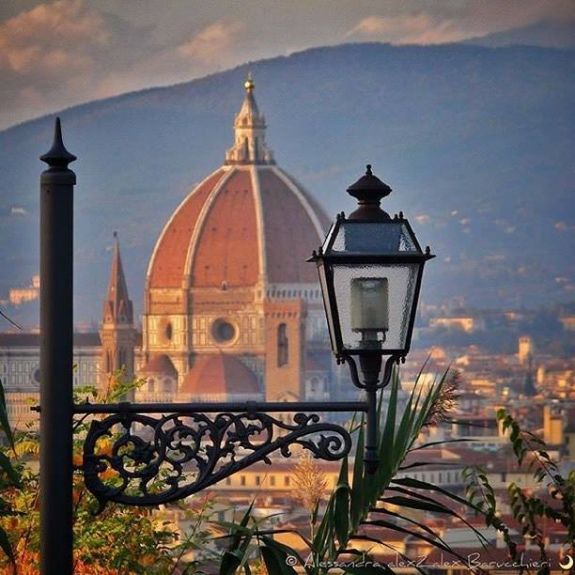
The origins of Florence
The documented history of Florence begins in 59 BC with the establishment by Julius Caesar of a settlement of Roman veterans called Florentia. The Romans built a castrum with the main streets, the cardo and the decumanus, intersecting where the Piazza della Repubblica is now located. The layout of the camp is still discernable in the distribution of the streets in the city centre. Florentia was situated on the Via Cassia, the main route between Rome and the North, at a ford - later a bridge - across the Arno. This advantageous location allowed the Roman settlement to expand into an important commercial town. The Emperor Diocletian made Florentia capital of the province of Tuscia in the 3rd century AD.St Minias was Florence’s first martyr. He was beheaded at about 250 AD, during the anti-Christian persecutions of the Emperor Decius. The Basilica di San Miniato al Monte commemorates this event.

Florence under the Ostrogoths and Lombards
Florence was the seat of a bishopric from around the beginning of the 4 C. The city experienced turbulent periods under Ostrogothic rule during which the city was frequently besieged and plundered. The population may have fallen to as few as 1,000 inhabitants during this period.Peace returned under Lombard rule in the 6 C. After being conquered by Charlemagne in 774, Florence became part of the Duchy of Tuscany, with Lucca as its capital. The population began to increase and commerce prospered. In 854, Florence and Fiesole were united into one county.
In about 1000 AD, the Margrave Hugo chose Florence as his residence instead of Lucca. This initiated the Golden Age of Florentine art. In 1013, construction began on the Basilica di San Miniato al Monte. The exterior of the baptistry was reworked in Romanesque style between 1059 and 1128.
Florence the city state
Florence began to revive from the 10 C and was governed from 1115 by an autonomous commune. The city was plunged into internal strife by the 13 C struggle between the Ghibellines, supporters of the German emperor, and the pro-Papal Guelphs, who after their victory split in turn into feuding "White" and "Black" factions led respectively by Vieri de Cerchi and Corso Donati. These struggles eventually led to the exile of the White Guelphs, one of whom was Dante Alighieri. This factional strife was later recorded by Dino Compagni, a White Guelph, in his "Chronicles of Florence".Political conflict did not, however, prevent Florence from becoming one of the most powerful and prosperous cities in Europe, assisted by her strong gold currency, the florin (introduced in 1252), the eclipse of her formerly powerful rival Pisa (defeated by Genoa in 1284 and subjugated by Florence in 1406), and the exercise of power by the mercantile elite following an anti-aristocratic movement, led by Giano della Bella, that resulted in a set of laws called the Ordinances of Justice (1293).
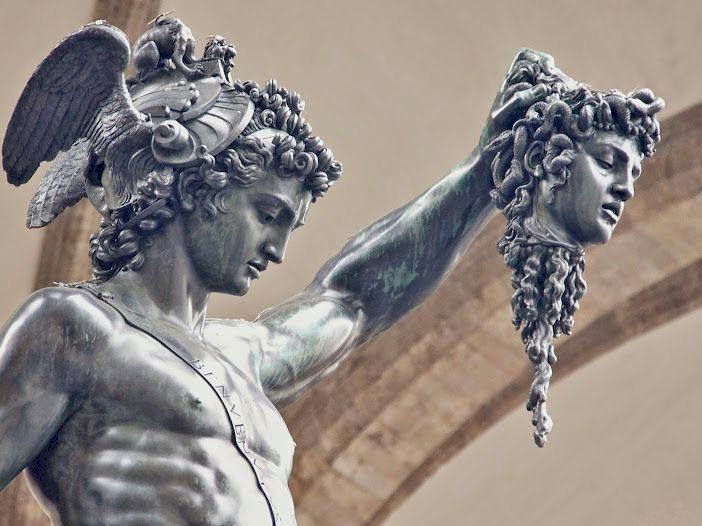
Florence and the Renaissance
The surge in artistic, literary and scientific investigation that occurred in Florence in the 14th-16th centuries was precipitated by Florentines' preoccupation with money, banking and trade and with the display of wealth and leisure.Added to this, the crises of the Catholic church (especially the controversy over the French Avignon Papacy and the Great Schism), along with the catastrophic effects of the Black Death, led to a re-evaluation of mediaeval values, resulting in the development of a humanist culture, stimulated by the works of Petrarch and Boccaccio. This prompted the re-evaluation and study of the classical antiquity, leading to the Renaissance. Florence benefited materially and culturally from this sea-change in social consciousness.
The rise and fall of the Medici
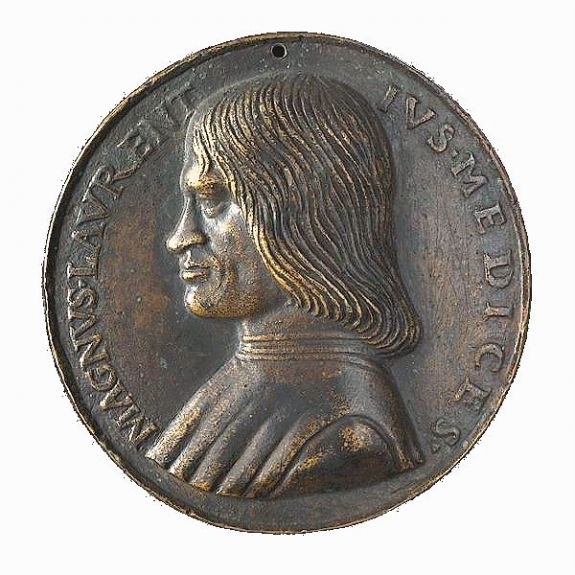
Of a population estimated at 80,000 before the Black Death of 1348, about 25,000 are said to have been supported by the city's wool industry. In 1345 Florence was the scene of an attempted strike by wool combers (ciompi), who in 1378 rose up in a brief revolt against oligarchic rule in the Revolt of the Ciompi. After their suppression, Florence came under the sway (1382-1434) of the Albizzi family, bitter rivals of the Medici. Cosimo de' Medici was the first Medici family member to control the city. Although the city was technically a democracy of sorts, his power came from a vast patronage network along with his alliance to the new immigrants, the gente nuova. The fact that the Medici were bankers to the Pope also contributed to their rise. Cosimo was succeeded by his son Piero, who was shortly thereafter succeeded by Cosimo's grandson, Lorenzo in 1469. Lorenzo was a great patron of the arts, commissioning works by Michelangelo, Leonardo da Vinci and Botticelli.Following the death of Lorenzo in 1492, he was succeeded by his son Piero II. When the French king Charles VIII invaded northern Italy, Piero II chose to resist. But when he realised the size of the French army at the gates of Pisa, he had to accept the humiliating conditions of the French king. These made the Florentines rebel and they expelled Piero II. With his exile in 1494, the first period of Medici rule ended with the restoration of a republican government.
During this period the Dominican monk Girolamo Savonarola had become Prior of the monastery of San Marco in 1490. He was famed for his penitential sermons. He described the exile of the Medicis as the work of God, punishing them for their decadence. He seized the opportunity to carry through political reforms leading to a more democratic rule. His monomaniacal persecution of the widespread Florentine sodomy and of other worldly pleasures both influenced and foreshadowed many of the wider religious controversies of the following centuries. But when Savonarola publicly accused Pope Alexander VI of corruption, he was banned from speaking in public. When he broke this ban, he was excommunicated. The Florentines, tired of his extreme teachings, turned against him and arrested him. He was convicted as a heretic and burned at the stake on the Piazza della Signoria on 23 May 1498.
A second individual of unusual insight was Niccolò Machiavelli, whose prescriptions for Florence's regeneration under strong leadership have often been seen as a legitimisation of political expediency and even malpractice. Commissioned by the Medici, Machiavelli also wrote the "Florentine Histories", the history of the city.
The Florentines drove out the Medici for a second time and re-established a republic on May 16, 1527. Restored twice with the support of both Emperor and Pope, in 1537 the Medici became hereditary Dukes of Florence, and in 1569 Grand Dukes of Tuscany, ruling for two centuries. In all Tuscany, only the Republic of Lucca (later a Duchy) was independent from Florence.
Florence under Austria
The extinction of the Medici line and the accession in 1737 of Francis Stephen, duke of Lorraine and husband of Maria Theresa of Austria, led to Tuscany's inclusion in the territories of the Austrian crown. Austrian rule was to end in defeat at the hands of France and the kingdom of Sardinia-Piedmont in 1859, and Tuscany became a province of the united kingdom of Italy in 1861.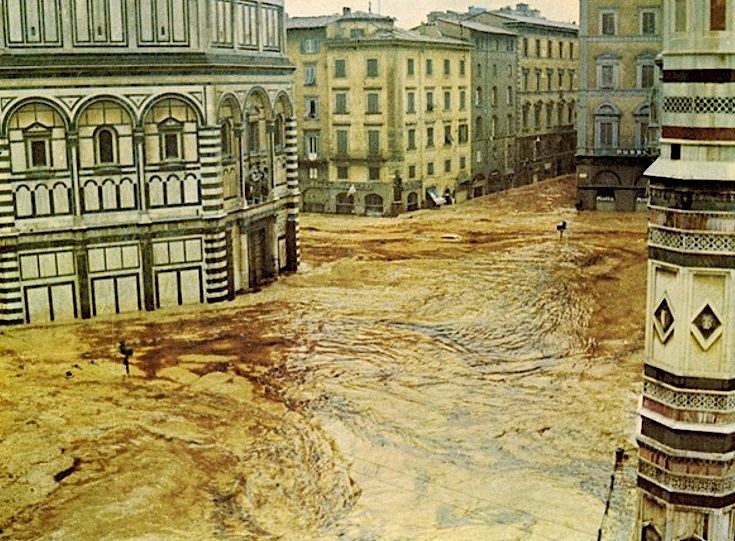
Modern Florence - Unification of Italy
Florence replaced Turin as Italy's capital in 1865, hosting the country's first parliament, but was superseded by Rome six years later, after the withdrawal of the French troops made its addition to the kingdom possible. After doubling during the 19 C, Florence's population tripled in the 20 C with the growth of tourism, trade, financial services and industry. During World War II the city experienced a year-long German occupation (1943-1944). The Allied soldiers who died driving the Germans from Tuscany are buried in cemeteries outside the city (Americans about 9 kilometers (6 miles) south of the city, and British and Commonwealth soldiers a few kilometers east of the center on the north bank of the Arno)In November 1966, the Arno flooded parts of the centre, drowning 101 people and damaging thousands art treasures and rare books. There was no warning from the authorities who knew the flood was coming, except a phone call to the jewellers on the Ponte Vecchio.
 |
|
|
|
|
|
|
|
|
|
|
|
|
|
|
|
|
|
|
|
|
|
|